English
 Español
 لالعربية
Complete Coffee Capsule Packaging Line Guide
release time:
2026-03-31
Read our comprehensive guide on configuring a complete coffee capsule packaging line. Learn about cup feeding, precision filling, sealing technology, and line integration.
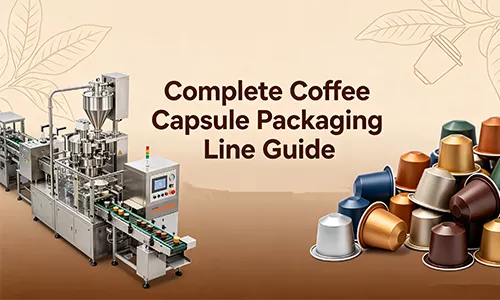
Complete Coffee Capsule Packaging Line Guide
As the global coffee capsule market continues to expand, more coffee brands are investing in automated packaging production.
A complete coffee capsule packaging line not only improves production efficiency but also enhances product consistency and brand competitiveness.
So, what equipment is included in a complete coffee capsule production line, and how does the packaging process work?
Let’s take a closer look.
What Is a Coffee Capsule Packaging Line?
A coffee capsule packaging line is an automated system designed to complete the entire process of capsule production, filling, sealing, and secondary packaging.
Depending on production requirements, the line can support:
Nespresso capsules
K Cup capsules
Dolce Gusto capsules
Aluminum capsules
PP capsules
Modern production lines are designed for high speed, precision, and stable operation.
Main Process of a Coffee Capsule Packaging Line
A complete production line typically includes the following steps:
1. Automatic Capsule Feeding
The system automatically places empty capsules onto the production station.
Automatic feeding improves efficiency and reduces manual errors.
2. Coffee Powder Filling
A high-precision dosing system fills the capsules with a consistent amount of coffee powder.
Accurate filling helps ensure:
Consistent product weight
Stable coffee quality
Reduced material waste
3. Powder Pressing System
Some coffee products require powder pressing to improve coffee density.
This helps optimize extraction performance and product consistency.
4. Nitrogen Filling
Before sealing, nitrogen gas is injected into the capsule to reduce oxygen content.
Nitrogen flushing helps:
Extend shelf life
Preserve coffee aroma
Improve product quality
Today, nitrogen filling has become an important feature in premium coffee capsule packaging.
5. Automatic Sealing
The sealing system automatically performs:
Film placement
Position alignment
Heat sealing
A high-quality sealing process prevents powder leakage and air exposure.
6. Date Coding and Inspection
Many production lines also integrate:
Date coding systems
Vision inspection systems
Metal detection functions
These features improve product quality control.
7. Secondary Packaging
After sealing, capsules may go through additional packaging processes such as:
Cartoning
Bag packaging
Labeling
Case packing
A complete end-of-line system enables fully automated production.
Why Are More Brands Choosing Automated Production Lines?
Compared with manual production, automated packaging lines offer major advantages.
Higher Efficiency
High-speed machines provide continuous and stable operation.
Lower Labor Costs
Automation reduces manual labor requirements and operating costs.
More Consistent Product Quality
Automated systems improve packaging consistency and accuracy.
Easier Capacity Expansion
Automation makes large-scale production easier for growing businesses.
How to Choose the Right Coffee Capsule Packaging Line?
When selecting equipment, important factors include:
Production capacity
Capsule compatibility
Automation level
Nitrogen flushing capability
Sealing stability
Future expansion flexibility
Professional machine suppliers can provide customized packaging solutions based on customer requirements.
Conclusion
As the coffee capsule market continues to grow, automated packaging lines are becoming the industry standard.
A stable and efficient coffee capsule packaging line can improve productivity while helping brands build long-term competitive advantages.
If you are looking for professional coffee capsule packaging solutions, feel free to contact us for customized recommendations and machine details.
label:
related news