English
 Español
 لالعربية
Liquid & Paste Filling Machine Design: Balancing Sanitization and Multi-Product Flexibility
release time:
2026-06-02
Master liquid and paste filling efficiency. Learn how CIP (clean-in-place) systems and anti-drip nozzle designs ensure sanitization and eliminate product waste.
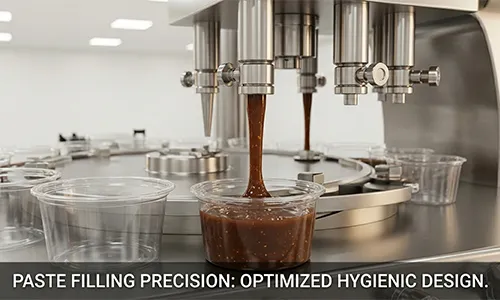
Whether you are filling craft syrups, pharmaceutical liquids, cosmetic lotions, or chunky hot sauces, two priorities dominate the operation: absolute hygienic safety and fast product changeover. In today's dynamic market, a liquid filling line can no longer afford to be a single-purpose system.
1. The Crucial Role of Sanitary Design (CIP Systems) In food and pharmaceutical sectors, contamination can trigger catastrophic product recalls. High-quality liquid and cup filling machines now utilize CIP (Clean-In-Place) systems. Operators can flush the entire filling circuit with sanitizing fluid automatically, eliminating the need to tedious manually disassemble pistons, valves, and nozzles.
2. Handling Viscosity: From Free-Flowing to Thick Pastes Viscosity management dictates your filler choice. While gravity or flow-meter fillers work perfectly for water-thin liquids, thick pastes with particulates (like chili paste or heavy creams) require heavy-duty rotary valve piston pumps or servo-driven augers to ensure drip-free, volumetric accuracy.
3. Preventing Drips and Foam for Flawless Sealing Nothing ruins a cup or bottle seal faster than product dripping onto the sealing rim. Advanced liquid packaging systems combat this using diving nozzles (bottom-up filling to prevent foaming) and positive shut-off nozzle tips that cut off liquid flow instantly without residual dripping.
Conclusion: Investing in a liquid filling line with high flexible dosing options and automated cleaning capabilities is the smartest way to protect your product integrity and slash changeover downtime.
label:
related news