English
 Español
 لالعربية

K Cup Filling Machine
release time:
2026-11-04
K Cup Filling Machine: A Complete Guide for Coffee ManufacturersDemand for singl
K Cup Filling Machine: A Complete Guide for Coffee Manufacturers
Demand for single-serve coffee keeps growing. K-Cup packaging is one of the widely used packaging formats in the coffee industry. Coffee roasters, private label coffee sellers and large beverage factories are buying automated packaging machines. They use these machines for two main goals: to raise output and keep consistent quality across every batch.
A K-Cup filling machine fills ground coffee into cups that fit the K-Cup standard. If your cup design needs a paper filter, the machine can place the filter automatically. Next, it applies a foil lid, seals the cup with heat and pressure, and outputs finished coffee capsules ready to ship and sell.
Whether you are new to the single-serve coffee business or want to replace old machines and upgrade your production line, a suitable K-Cup filling machine helps you run production faster, cut raw material waste and keep steady packaging quality.
After reading this guide, you will learn how a K-Cup filling machine works, which features you need to check, where these machines are commonly used, and what details you need to confirm before you buy coffee production machines.
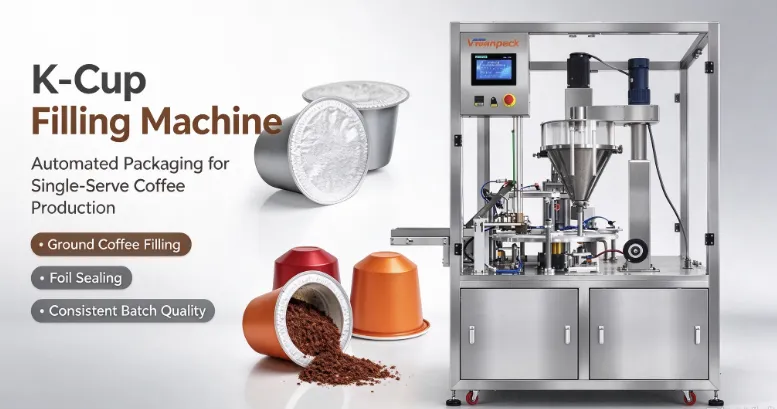
1. What Is a K-Cup Filling Machine?
A K-Cup filling machine is an automated packaging machine. It fills ground coffee into single-serve coffee cups, commonly known as K-Cups or compatible coffee capsules.
Most machines combine these packaging steps on one production line:
Automatic empty cup feeding and positioning
Paper filter placement based on cup style (optional)
Ground coffee dosing and filling
Coffee leveling and settling
Foil lid placement
Heat sealing
Automatic discharge of sealed finished cups
Manufacturers can choose semi-automatic or fully automatic models based on their output needs.
For coffee producers, a reliable K-Cup filling machine keeps small weight differences between cups, delivers stable sealing results and supports continuous high-volume production.
2. How a K-Cup Filling Machine Runs
When you select a coffee capsule packaging machine, you need to understand its full working sequence. A standard fully automatic K-Cup filling machine follows these steps:
Step 1: Load empty cups
Empty K-Cup cups feed into the machine. The cup feeding unit moves each cup to the filling station and holds it in the correct position.
Step 2: Insert paper filter
If your cup uses an internal paper filter, the machine puts the filter into the empty cup before coffee filling starts.
Step 3: Fill ground coffee
Ground coffee flows from the hopper into the dosing unit. The machine releases the set weight of coffee into each cup. You can select different dosing units. Your choice depends on the coffee type you use and the weight accuracy you require.
Step 4: Level the coffee
After filling, the machine levels the top surface of the coffee. This keeps the fill height similar for every cup and creates a flat surface for sealing.
Step 5: Place the foil lid
The machine puts a foil lid on top of the filled cup. Accurate lid placement ensures uniform packaging.
Step 6: Heat seal
The sealing station delivers stable heat and pressure to bond the foil lid tightly to the cup rim. Good sealing directly controls how long coffee stays fresh. It also lowers the risk of coffee powder leaking or contamination.
Step 7: Discharge finished cups
Sealed K-Cups exit the machine automatically. You can collect them, check appearance, pack them or put them into outer cartons.
3. Key Features to Check on a Fully Automatic K-Cup Filling Machine
When you buy a K-Cup filling machine, check its structure, hourly output and long-run stability. Pay close attention to these features:
✅ Accurate coffee dosing
Consistent coffee weight for every cup directly affects product quality and buyer satisfaction. A good dosing unit controls the amount of coffee going into each cup. It reduces weight variation and cuts coffee waste.
✅ Automatic cup feeding
An automatic cup feeding unit removes repeated manual cup loading work and speeds up production. It also makes sure empty cups sit correctly before reaching the filling station.
✅ Stable and reliable sealing
Seal quality decides coffee shelf life. The sealing system must maintain steady temperature and pressure. The seal needs to stay tight and resist tearing or powder leakage.
✅ Simple touch screen control
Most modern K-Cup filling machines use a PLC control system with a touch screen. Operators can adjust production settings, check machine status and switch between packaging programs easily.
✅ Stainless steel for food contact parts
All parts that touch coffee powder use food-grade stainless steel. This meets food production rules, makes daily cleaning easier and simplifies later maintenance.
4. Common Applications of K-Cup Filling Machines
K-Cup filling machines mainly work for single-serve coffee packaging. After changing accessories, they fit many coffee products and compatible cup sizes.
Typical uses include:
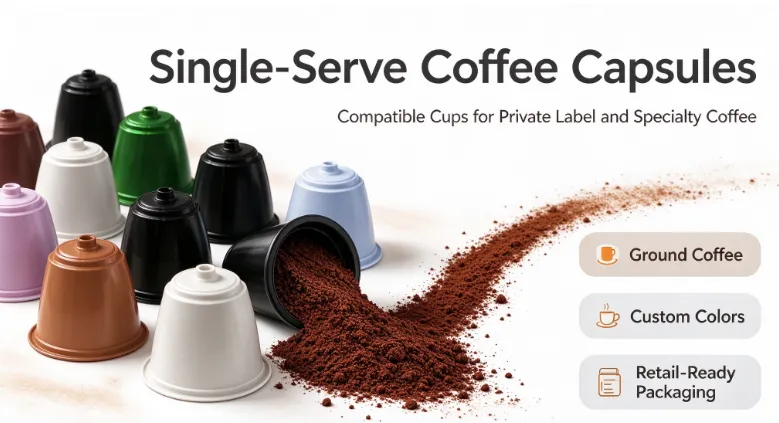
Ground coffee K-Cups
Single-serve coffee capsules
Private label custom coffee products
Small-batch specialty coffee packaging
Commercial coffee packs
Coffee products for hotels, offices and food service shops
Custom models can also fill other powder or granule products into the same style of single-serve containers.
Always test your raw material on the machine before you place an order, to confirm the machine works for your product.
5. How to Pick the Right K-Cup Filling Machine
Buying a K-Cup filling machine is a major expense for coffee factories. Confirm these points before ordering:
5.1 Output requirement
Calculate how many cups you need to produce per hour and per day. Small coffee factories with low output can choose compact semi-automatic machines. Large factories usually select high-speed fully automatic lines. Choose a machine that meets your current output and leaves room for future order growth.
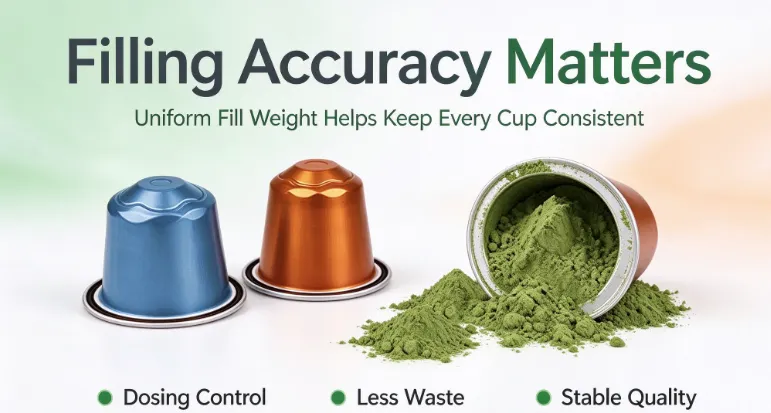
5.2 Filling accuracy
Different coffee products need different fill weights. Ask the machine supplier about the dosing method, fill weight range and weight tolerance. The best practice is to run a test with your actual coffee powder before locking the machine configuration.
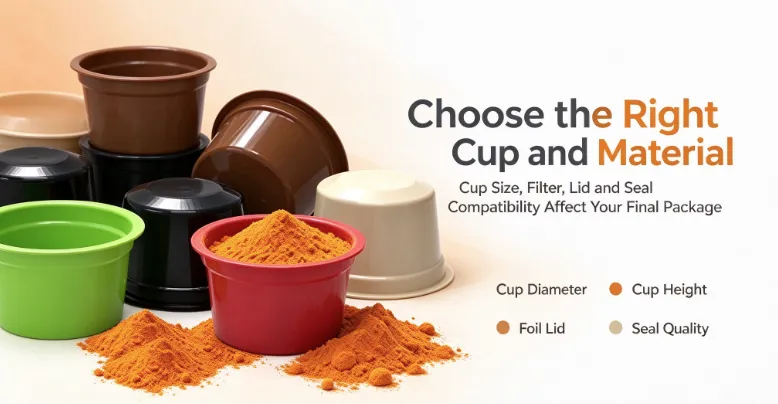
5.3 Cup compatibility
Single-serve coffee cups do not come in one standard size. Confirm these details before purchase:
Cup inner diameter
Cup height
Cup material
Paper filter requirement
Lid size
Seal compatibility between lid and cup
You can send sample cups directly to the machine supplier. They will build matching molds for your cup.
5.4 Sealing performance
A good sealing unit locks in coffee aroma and extends freshness. Confirm the machine works with the foil lid and cup material you plan to use. During testing, check sealing temperature, pressure and finished seal quality.
5.5 Automation level
Choose between semi-automatic and fully automatic models. Fully automatic machines need less manual work and produce more consistent results. Semi-automatic machines fit sellers with low order volume.
5.6 After-sales service and technical support
Long-term stable machine operation depends on reliable technical support. Work with suppliers that offer installation guidance, operator training, spare parts, troubleshooting and regular maintenance guidance.
6. Fully Automatic vs Semi-Automatic K-Cup Filling Machine
Both types fit different situations. Your choice depends on your output, budget and available workers.
| Item | Semi-Automatic Model | Fully Automatic Model |
|---|---|---|
| Operation | Needs workers to support multiple steps | Full automatic process |
| Suitable output | Small batch production | Large continuous production |
| Labor needed | More workers required | Very few workers needed |
| Initial cost | Lower price | Higher investment |
| Production speed | Medium | Faster |
| Best for | New startups, small coffee roasters | Large-scale coffee production factories |
If your orders keep rising and you need higher output over time, a fully automatic K-Cup filling machine delivers better value in the long run.
7. Factors That Affect K-Cup Filling Machine Price
K-Cup filling machine prices vary widely based on configuration. These points change the total machine cost:
Automation level: Fully automatic models usually cost more than semi-automatic ones
Production speed: Higher hourly output needs more complex mechanical and control systems
Dosing design: Different filling units have different costs and weight control performance
Cup specifications: Non-standard cup sizes or special packaging formats require custom molds
Sealing system: Different sealing structures and temperature controls change the price
Optional extra functions: Automatic inspection, coding, carton packing and other add-ons increase the total price
To get an accurate quotation, send this information to your supplier: target hourly output, cup dimensions, fill weight per cup, lid material and automation requirements.
8. Why Coffee Factories Invest in Fully Automatic K-Cup Filling Machines
For coffee businesses with growing sales, automatic machines bring clear practical benefits:
✅ Faster production
Automatic cup feeding, coffee filling and sealing remove many repeated manual tasks and raise total output
✅ Consistent product quality
The dosing unit locks in the same coffee weight for every cup. Stable sealing temperature and pressure create uniform finished packs
✅ Lower labor cost
Fewer manual steps in production make workforce planning easier and control labor expenses
✅ Neat finished appearance
Accurate cup positioning, even filling and flat sealing create uniform products ready for retail in stores and online shops
✅ Scalable output
When orders grow, you can upgrade to faster models or add new packaging lines to expand capacity
9. Frequently Asked Questions About K-Cup Filling Machines
Q1: What products can a K-Cup filling machine pack?A: This machine is originally designed to fill ground coffee into K-Cup compatible cups. With custom changes, it can also fill other suitable powder or granule materials.
Q2: Can the same K-Cup machine run different cup sizes?A: Yes. Many models support different cups after changing molds, tooling or adjusting machine parameters. Confirm supported cup sizes with your supplier in advance.
Q3: How many K-Cups can one machine make per hour?A: Output depends on machine model, number of filling stations, automation level and packaging steps. Share your target output with the supplier so they can recommend the right model.
Q4: Does a K-Cup filling machine include sealing?A: Most fully automatic K-Cup filling machines come with foil lid placement and heat sealing units. The final setup depends on the exact model.
Q5: How do you maintain a K-Cup filling machine?A: Regular maintenance includes cleaning all coffee contact parts, checking the dosing unit, inspecting sealing parts, lubricating specified moving components and testing electrical and pneumatic systems. Follow the maintenance manual from your supplier to keep the machine running well.
Q6: Can I customize a K-Cup filling machine for my packaging needs?A: Many machine suppliers offer custom solutions. You can adjust the machine based on cup size, fill weight, output, lid material and automation needs. Sending packaging samples for testing is the best way to confirm compatibility.
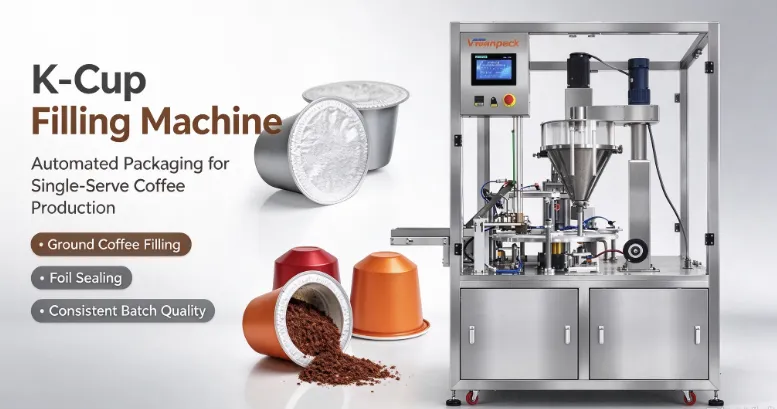
10. Select the Right K-Cup Filling Machine for Your Coffee Production Line
A suitable K-Cup filling machine helps you speed up production, hold steady fill weight and keep consistent coffee packaging quality. Whether you run a small coffee roastery or a large coffee factory, your packaging solution must match your product specs, current output goals and long-term plans.
When you evaluate machines, focus on filling accuracy, cup compatibility, sealing performance, automation level and after-sales support.
If you are looking for a stable K-Cup filling machine, contact our team. Tell us your coffee packaging requirements, and we will recommend a filling solution that fits your production line.
label:
Previous
Previous