English
 Español
 لالعربية

Automatic Cream Filling Machine
release time:
2026-10-31
Fully Automatic Cream Filling Machine: A Complete Guide for Cosmetic and Skincar
Fully Automatic Cream Filling Machine: A Complete Guide for Cosmetic and Skincare Manufacturers
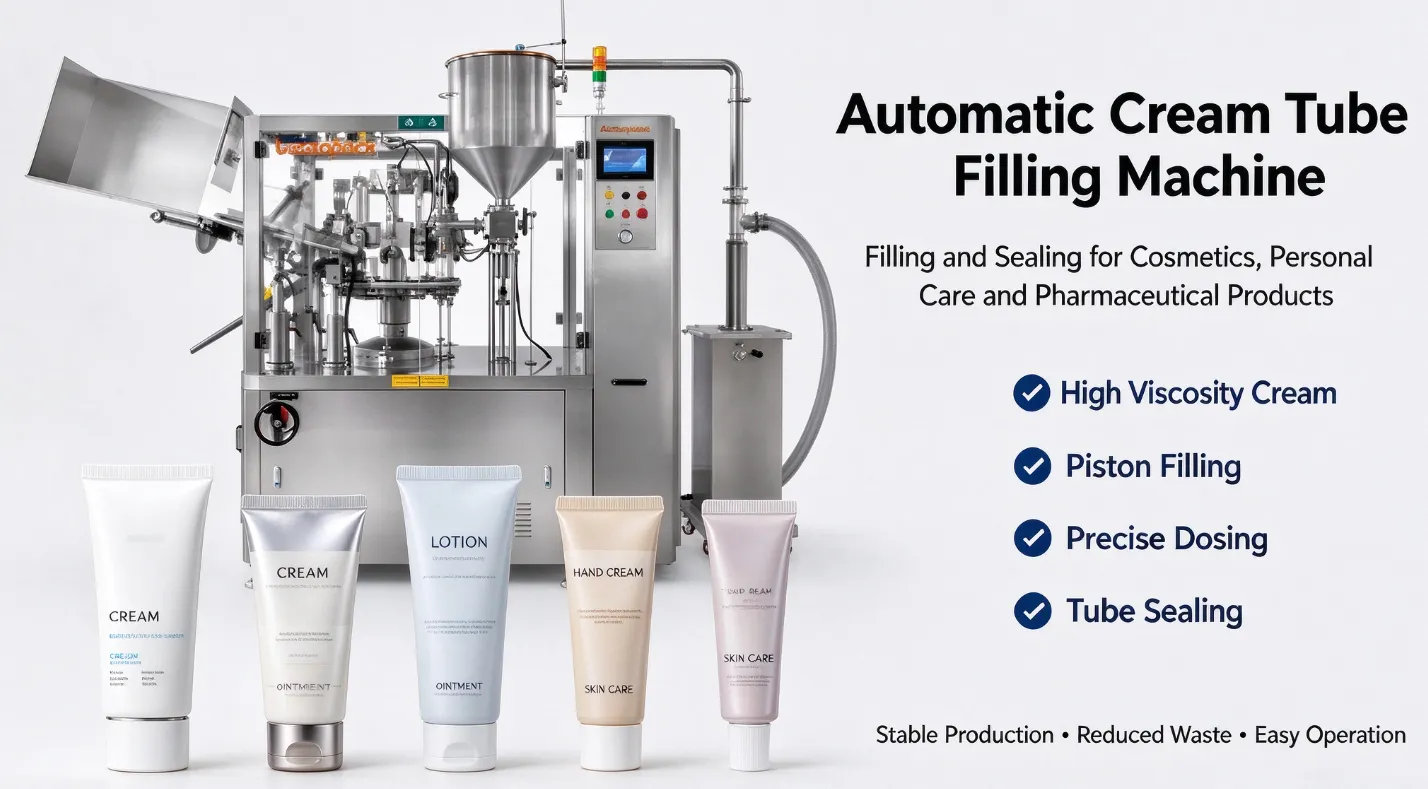
Cream products are used in multiple industries, including cosmetics, skincare, personal care, and pharmaceuticals. Common products include moisturizers, facial creams, body lotions, hand creams, and hair care products. Manufacturers need reliable filling equipment to ensure consistent product quality across each batch and to improve production speed.
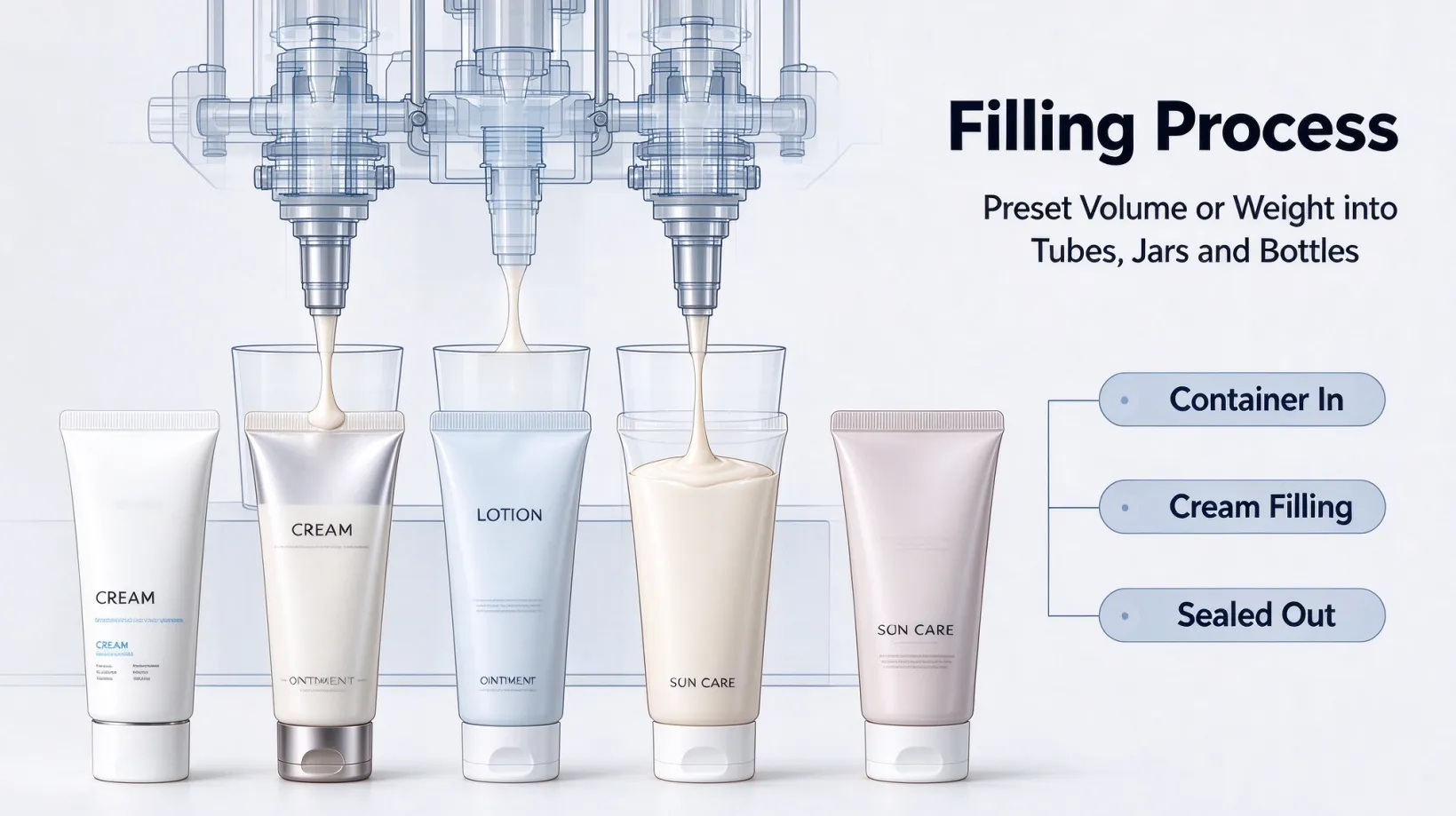
The function of a fully automatic cream filling machine is to fill cream products into jars, bottles, tubes, and other packaging containers according to a preset weight or volume. Compared with manual filling and semi-automatic filling equipment, fully automatic equipment can significantly improve production speed, reduce labor input, and keep filling volume under stable control.
If a manufacturer wants to increase output or upgrade its packaging production line, choosing a suitable fully automatic cream filling machine is an important production investment.
This guide explains the following: how a fully automatic cream filling machine operates, the main products it can process, the core functions of the equipment, and the conditions that need to be confirmed when purchasing equipment.
1. What Is a Fully Automatic Cream Filling Machine?
A fully automatic cream filling machine is industrial packaging equipment. It can automatically fill cream products into packaging containers according to a preset amount.
This equipment is mainly used to fill medium-viscosity to high-viscosity materials, including cosmetic creams, skincare products, pharmaceutical ointments, and personal care materials.
Cream materials are different from water. Their overall viscosity is higher. Materials with different formulations also have different flow capabilities. Therefore, filling cream materials requires specialized filling equipment to ensure stable material discharge and accurate filling volume.
A standard fully automatic cream filling machine mainly includes the following components:
Product storage hopper
Filling pump or piston filling assembly
Filling discharge nozzle
Automatic container feeding mechanism
Product conveyor line
PLC electrical control system
Touchscreen operation panel
Automatic filling and discharging mechanism
According to actual production requirements, this equipment can be connected with automatic jar feeding, capping, labeling, and other machines to form a complete packaging production line.
2. What Products Can a Fully Automatic Cream Filling Machine Fill?
A fully automatic cream filling machine can handle a variety of viscous and semi-viscous materials.
Different products have different viscosity levels, material ingredients, and flow capabilities. Choosing the right filling components allows production to run smoothly and keeps the filling result consistent for each product.
Common product categories that can be handled:
Cosmetics and Skincare Products
Face cream, moisturizing cream, anti-aging cream, sunscreen, eye cream, night cream, body butter, hand cream
Personal Care Products
Body lotion, hair conditioner, hair mask, shaving cream, body moisturizer, hair styling cream
Pharmaceutical Products
Medical ointments, topical creams, dermatological ointments, antibacterial ointments
Food Products
Peanut butter, chocolate spread, mayonnaise, thick sauces, dairy cream products
When manufacturers purchase equipment, they need to confirm several pieces of information: material viscosity, filling operation temperature, container size, whether the material contains solid particles, and whether it contains ingredients that are easily damaged by external force.
The above conditions directly determine the filling pump selection, filling nozzle structure, and overall machine configuration plan.
3. How Does a Fully Automatic Cream Filling Machine Operate?
A fully automatic cream filling machine completes its work through multiple coordinated processes.
Different equipment manufacturers and different production requirements lead to different equipment configurations, but the basic operating process is divided into the following five steps:
Step 1: Material Feeding
Cream material is fed into the equipment's storage hopper. According to the characteristics of the material itself, the storage hopper can be equipped with a heating module or mixing module to maintain a stable material condition.
Step 2: Container Conveying
Empty jars, empty bottles, or other packaging containers are placed on the conveyor line and conveyed to the filling work station. The equipment's positioning mechanism fixes each container directly under the filling nozzle.
Step 3: Automatic Filling Operation
The filling assembly injects a preset amount of material into the container. For high-viscosity materials, piston filling systems are mostly used. This system completes quantitative filling by volume and has stable operating performance.
Step 4: Filling Completion
After the material reaches the set filling volume, the filling nozzle stops discharging. According to the equipment structure, filling nozzles with anti-drip function or suck-back structures can reduce material dripping and avoid material waste.
Step 5: Discharging Filled Containers
Containers already filled with material move along the conveyor line to the next packaging process, such as capping, sealing, labeling, or cartoning.
If the enterprise needs higher production speed, the filling machine can be combined with automatic feeding, capping, and labeling equipment.
4. Core Functions of a Fully Automatic Cream Filling Machine
When purchasing a fully automatic cream filling machine, manufacturers need to focus on the following equipment functions.
4.1 Small Filling Volume Deviation
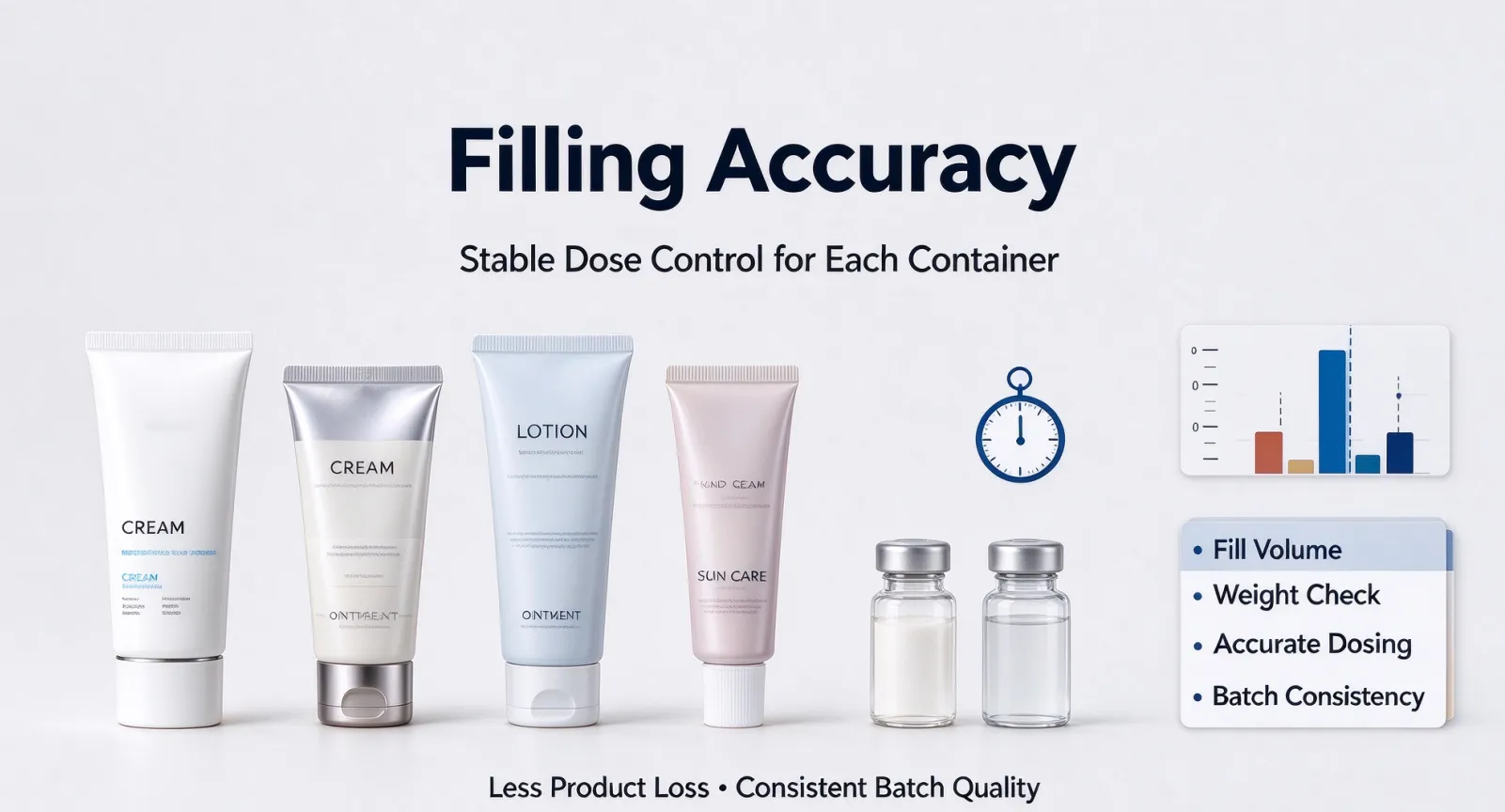
Filling volume accuracy is a very critical condition in cream packaging production. If the filling volume deviation is large, it will cause material loss, inconsistent fill volume in each package, and customer complaints. A qualified piston filling system completes filling according to the set volume and ensures stable discharge throughout the production process. Actual filling deviation is affected by material viscosity, single filling volume, equipment configuration, and on-site operating conditions.
4.2 Suitable for High-Viscosity Materials
The viscosity of cream materials is generally higher than that of ordinary liquid materials.
A fully automatic cream filling machine needs to be matched with a suitable pump structure to handle high-viscosity materials without unstable feeding or large material loss.
If the material viscosity is very high, the enterprise can choose to widen the material flow passage, customize special filling nozzles, or add an auxiliary feeding device to the storage hopper.
4.3 Stainless Steel Body Structure
In production scenarios for cosmetics, pharmaceuticals, and food, the materials used to make the equipment are very important.
Most cream filling machine main frames use SUS304 stainless steel. If production has higher requirements, parts in direct contact with materials can use SUS316L stainless steel.
Material selection needs to refer to three points: whether the material and metal material will react, equipment cleaning requirements, and the production standards of the corresponding industry.
4.4 Simple Parameter Adjustment and Low Operating Barrier
Most new fully automatic cream filling equipment now is equipped with a PLC control system and touchscreen operation interface.
Operators can modify filling volume, production speed, and other operating parameters on the control panel. When switching between different product specifications and packaging containers of different sizes, adjustment work is simple and quick.
4.5 Simple Cleaning and Maintenance Work
Cream materials easily leave residue on parts that come into contact with materials.
If the storage hopper can be opened quickly, the filling nozzles can be removed, and parts in contact with materials are easy to disassemble and assemble, equipment cleaning and maintenance work will be simpler.
For enterprises that need to produce products with multiple formulations, cleaning efficiency can reduce equipment downtime waiting time.
5. Different Types of Cream Filling Machines
Different cream filling machines are suitable for different production scenarios. Manufacturers can choose the corresponding equipment configuration according to packaging container type, target output, and material characteristics.
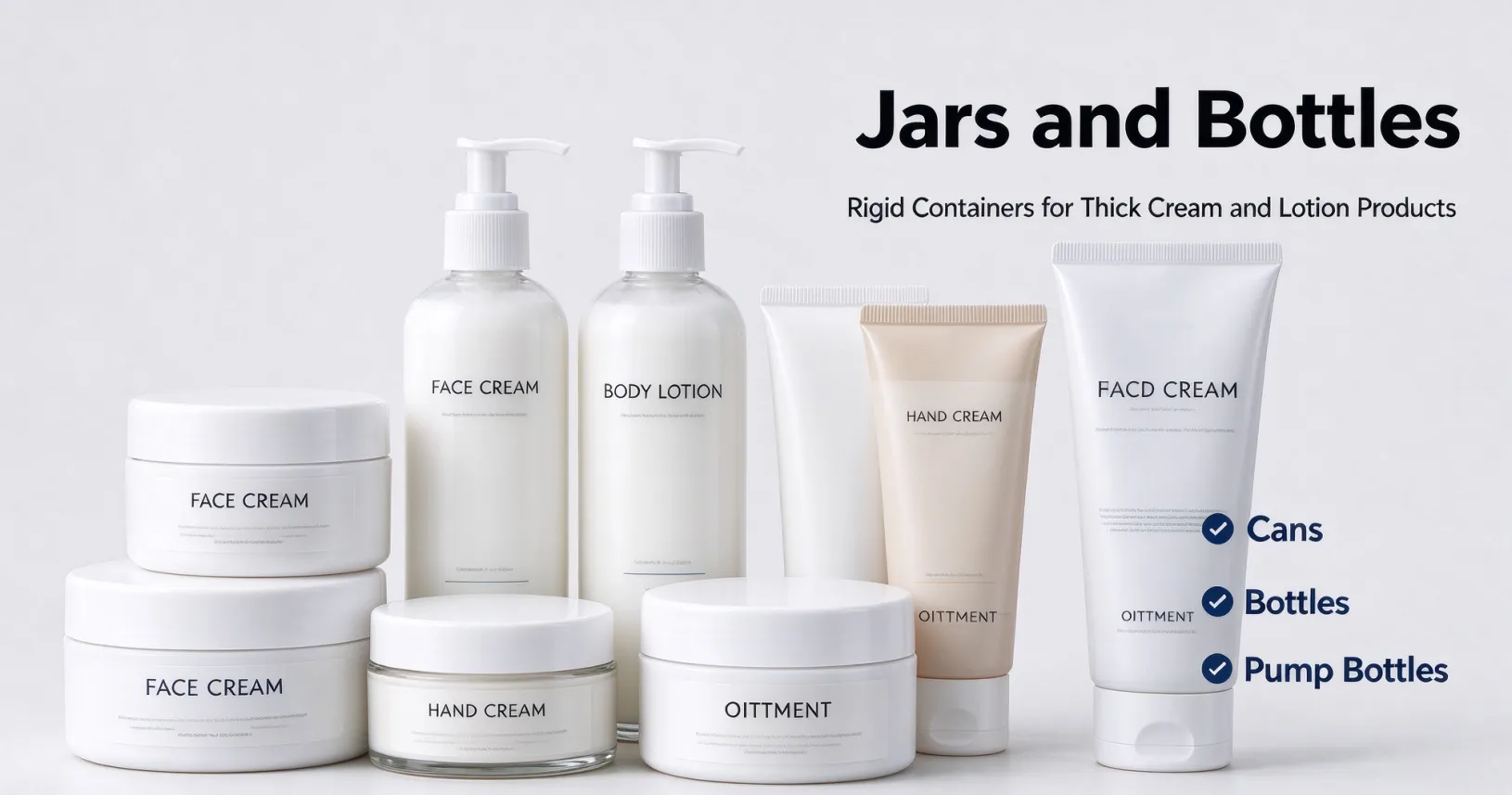
Fully Automatic Cream Filling Machine (Jar Filling Model)
This equipment is specially designed to fill cosmetic creams into plastic jars or glass jars.
Typical application products: face cream jars, body butter jars, moisturizing cream jars, hair mask jars, skincare product jars. This equipment can be connected with automatic jar feeding, jar positioning, filling, and capping equipment to form a complete production line.
Fully Automatic Cream Filling Machine (Bottle Filling Model)
This equipment is suitable for filling creams, lotions, conditioners, and other viscous materials into bottles. The selection of filling nozzles and pump bodies needs to be determined based on material viscosity and bottle opening size.
Fully Automatic Tube Filling Machine
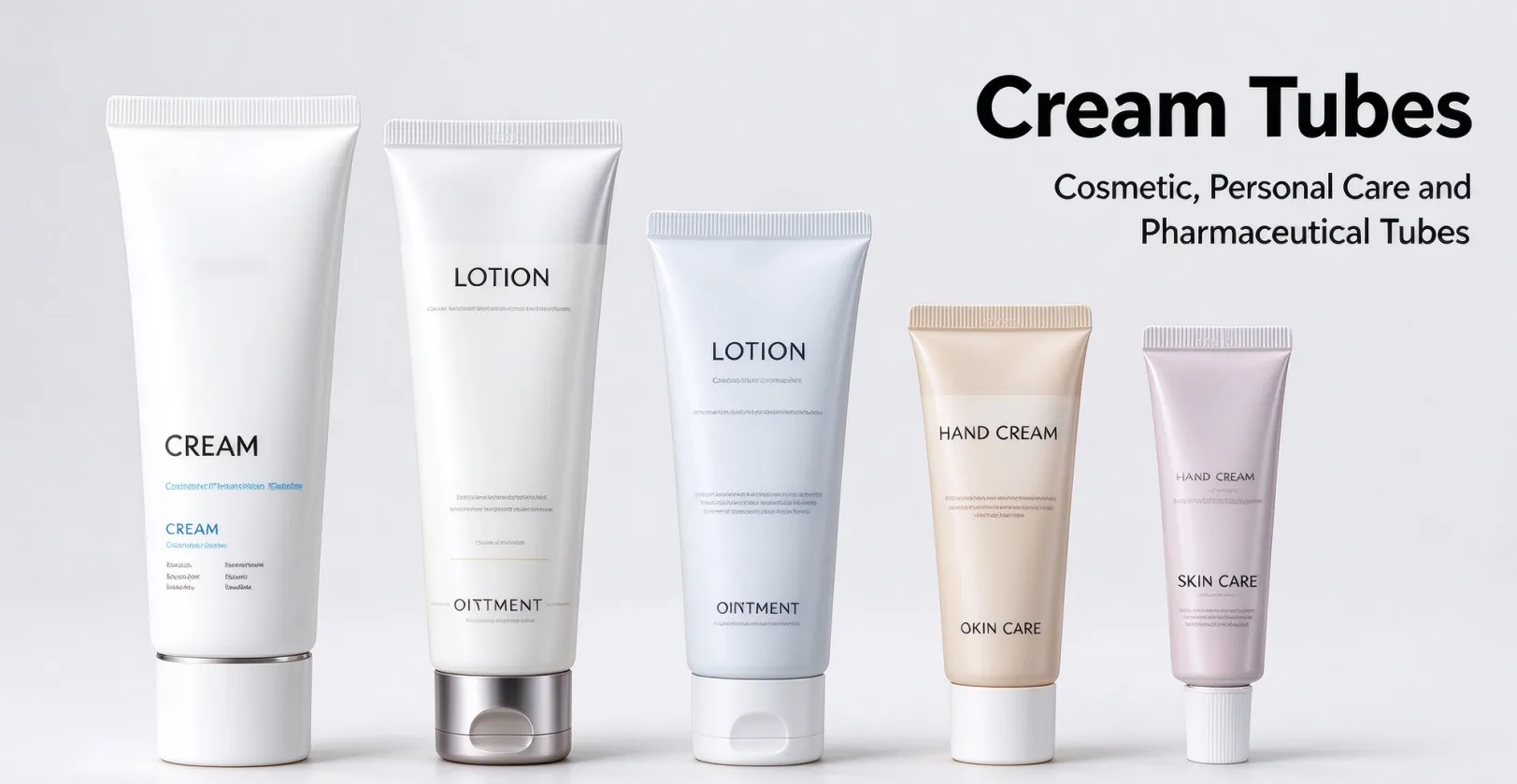
This equipment is specially designed to fill cream materials into plastic tubes, laminated tubes, or aluminum tubes.
Typical application products: face cream, hand cream, sunscreen, toothpaste, pharmaceutical ointments.
According to differences in tube materials, the equipment can be equipped with hot-air sealing, ultrasonic sealing, or other suitable sealing components.
Important note: Jar filling equipment, bottle filling equipment, and tube filling equipment have different equipment structures. Before purchasing equipment, please explain your packaging type and specific sealing requirements to the equipment supplier.
6. How to Choose a Suitable Fully Automatic Cream Filling Machine
Choosing a fully automatic cream filling machine cannot rely only on comparing equipment price and theoretical production speed.
The multiple conditions listed below can help manufacturers make a purchasing decision.
6.1 Confirm Material Viscosity
Material viscosity directly determines how the filling system is selected.
For example: low-viscosity lotions can use ordinary liquid filling equipment; medium-viscosity creams generally use piston filling equipment; very high-viscosity creams require widened material passages or auxiliary feeding devices.
If the material contains solid particles, fibrous substances, or raw materials sensitive to shear force, the structural design of the filling pump and filling nozzle needs to be evaluated.
6.2 Confirm All Packaging Container Parameters
Before purchasing equipment, please organize complete container information, including: container type, container diameter, container height, container opening size, single filling capacity, and packaging material.
Different container shapes and sizes may require different positioning mechanisms and filling supporting components.
6.3 Clarify Target Production Capacity
The planned output to be achieved is another key judgment condition.
Small cosmetic factories can choose compact fully automatic filling machines; large skincare manufacturers can choose high-speed integrated packaging production lines.
When evaluating capacity, please consider these factors: the number of products that need to be filled per minute, total daily output, daily working shifts, whether there are future plans to increase output, and the space available in the workshop for placing equipment.
It is necessary to distinguish between the maximum theoretical speed stated in the equipment manual and the actual output quantity on the factory floor. The two values are different.
6.4 Check Material Standards and Hygienic Production Requirements
If producing skincare products, pharmaceuticals, or food, please confirm the materials used for parts in direct contact with materials. At the same time, confirm the equipment cleaning process and operating difficulty, and confirm that the equipment complies with hygiene production regulations in the sales market.
6.5 Evaluate the Supplier's After-Sales Support
Purchasing a filling machine is a long-term production investment.
Before formally placing an order, please confirm the following content with the supplier: on-site equipment installation and commissioning, operator technical training, spare parts supply channels, technical problem support, equipment warranty coverage and duration, and equipment maintenance operation documents.
A reliable equipment supplier will provide complete technical documentation and provide technical support throughout the entire service life of the equipment.
7. Comparison Between Fully Automatic Cream Filling Machines and Semi-Automatic Cream Filling Machines
Both fully automatic and semi-automatic filling machines can fill cream materials, but they are designed for different production scenarios.
| Comparison Item | Fully Automatic Machine | Semi-Automatic Machine |
|---|---|---|
| Operation Method | The entire filling process runs automatically | Requires manual assistance |
| Production Speed | High | Low |
| Labor Requirements | Fewer operators needed | More manual involvement required |
| Achievable Capacity | Medium to high capacity | Low to medium capacity |
| Initial Purchase Investment | Higher investment cost | Lower investment cost |
| Product Quality Consistency | Stable fill volume when equipment is properly configured | Production results largely depend on operators |
| Application Scenarios | Large-volume continuous production | Small-batch production |
Fully automatic cream filling machines are more suitable for enterprises with stable output and larger production scale. For newly established factories, small processing plants, and enterprises with low output, semi-automatic filling machines can reduce initial investment.
8. What Benefits Can Be Obtained by Purchasing a Fully Automatic Cream Filling Machine?
Cosmetics and personal care product manufacturers can gain multiple long-term production benefits by using fully automatic cream filling equipment.
Increase production speed: Automated filling replaces a large amount of repetitive manual work and improves overall output.
Reduce labor costs: Container positioning and filling processes are completed automatically, reducing manual operation steps in production.
Stable filling quality: Properly matched filling components stably control the filling volume of each material batch and avoid overfilling.
Reduce material loss: Suitable filling nozzles and controllable discharge structures reduce material dripping and leakage, and reduce unnecessary material loss.
Facilitate subsequent capacity expansion: The filling machine can be connected with capping, labeling, and other packaging machines, making it convenient to increase output later.
For cosmetic manufacturers with continuous business growth, automated equipment can improve the work efficiency of the packaging process and support the enterprise's long-term business development.
9. Frequently Asked Questions About Fully Automatic Cream Filling Machines
Question 1: Can a fully automatic cream filling machine fill high-viscosity materials?
Yes. Most fully automatic cream filling machines use piston filling systems, specifically used to handle medium- and high-viscosity materials.
If the material viscosity is extremely high, the equipment needs widened material passages, customized special filling nozzles, or an added storage hopper auxiliary feeding mechanism. The final equipment configuration is recommended to be confirmed through actual material testing.
Question 2: What containers can a fully automatic cream filling machine be compatible with?
According to the equipment design, this equipment can use plastic jars, glass jars, bottles, and other containers. Tube-packaged products require the purchase of a dedicated tube filling and sealing integrated machine.
Question 3: What is the filling deviation range of a fully automatic cream filling machine?
Filling deviation is related to the filling mechanism, material viscosity, filling capacity, and on-site operating conditions. Enterprises need to obtain the deviation range marked by the supplier and use their own actual materials for testing and verification.
Question 4: Can the same equipment fill multiple different cream products?
Yes. Many machines can handle multiple cream materials, provided that the material parameters are within the equipment's processing range.
However, when material viscosity is different and container size is different, equipment operating parameters need to be adjusted, or some components need to be replaced.
Question 5: Is a fully automatic cream filling machine difficult to clean?
Most new equipment on the market has considered the cleaning of parts in contact with materials during the design stage, so the overall cleaning difficulty is not high.
However, the complexity of cleaning is affected by equipment structure and material formulation. Before purchasing, confirm whether equipment parts can be removed for cleaning, or whether the equipment supports CIP clean-in-place function.
Question 6: What Is the Price Range of a Fully Automatic Cream Filling Machine?
Equipment price is affected by filling capacity, automation level, filling capacity, equipment materials, and additional functions. Compact standalone equipment has a lower purchase cost than a complete filling-capping-labeling production line.
To obtain an accurate quotation, please provide material information, container parameters, and target production capacity to the supplier.
10. Choose a Suitable Fully Automatic Cream Filling Machine for Your Production Line
Choosing the right fully automatic cream filling machine can improve production speed, stabilize filling quality, and reduce labor input.
Whether the enterprise produces face cream, body lotion, hand cream, cosmetic ointment, or other viscous materials, the equipment configuration must match material characteristics and packaging requirements. This point is very critical.
we provide complete filling and packaging machinery solutions for different industries and different capacity requirements.
Our technical team can help enterprises evaluate material viscosity, filling capacity, container specifications, and target capacity, and provide a suitable filling equipment solution.
If you are looking for a fully automatic cream filling machine for your production line, you are welcome to contact us.
You can send material information and container photos to us, and we will provide the corresponding equipment solution and quotation.
label:
التالي
التالي