English
 Español
 لالعربية

Small Bottle Filling Machines
release time:
2026-10-29
Selection Guide for Small Bottle Filling Machines: Avoiding Procurement Traps an
Selection Guide for Small Bottle Filling Machines: Avoiding Procurement Traps and Improving Production Efficiency
Most operators of drinking water, functional beverages, and small bottled products for daily use have encountered the problem of purchasing filling machines.
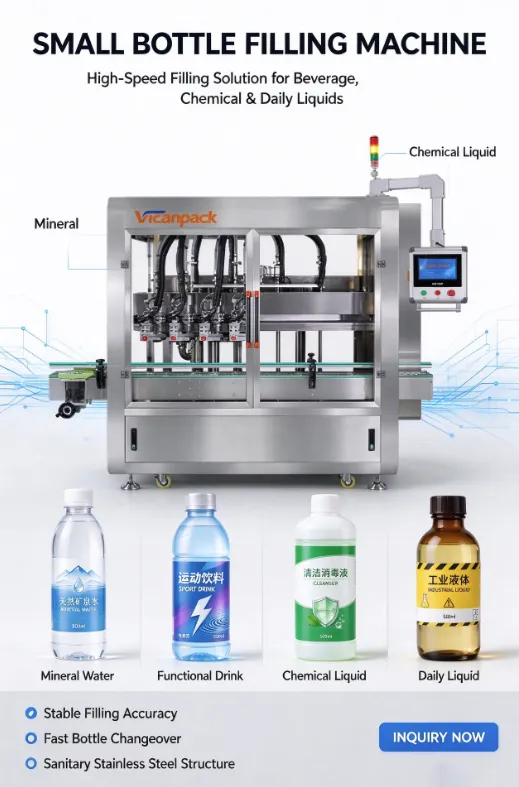
1. Avoid 3 common selection misconceptions
Many people encounter problems when purchasing equipment, not because the quality of the equipment itself is poor, but because the selection approach was wrong from the beginning.
The first misconception: only comparing quotes without checking accessory configurations. The price range of small bottle filling machines on the market is between 10000 and 100000 yuan, with most of the price difference coming from the reduction of core accessories. Some parts of equipment and materials that come into contact with food grade 304 stainless steel may rust within six months of use, directly affecting product hygiene and safety; Some are equipped with non branded motors and metering pumps, but after running for several months, the metering begins to shift and the filling error continues to increase. On the surface, saving tens of thousands of yuan makes it difficult to estimate the subsequent maintenance costs and production losses.
The second misconception: blindly pursuing high production capacity. Many operators believe that the faster the equipment speed, the better, and directly purchase models with production capacity far exceeding their own order requirements. After the equipment arrives, the order volume is unstable, and the machines are mostly idle, occupying workshop space. Even with hundreds of thousands of equipment investments, they cannot realize their value. For most regional water plants and small and medium-sized contract factories, choosing models with production capacity 15% -20% higher than the current peak order is the most cost-effective.
The third misconception: ignoring the manufacturer's after-sales support. The filling machine is the core equipment on the production line, and once it malfunctions, the entire production line will stop. Many small suppliers find it difficult to contact technical personnel after selling equipment; The equipment is broken, and maintenance personnel will have to wait 3-5 days to arrive. The losses caused by a one-day shutdown can even reach half of the total equipment price. Reliable and legitimate manufacturers can generally achieve remote response within 2 hours and on-site debugging and maintenance within 24 hours to ensure continuous and stable production.
2. Select a small bottle filling machine and identify 4 hard indicators
The industry equipment updates quickly, and the core performance of reliable models can be measured by data, without just listening to verbal introductions from suppliers.
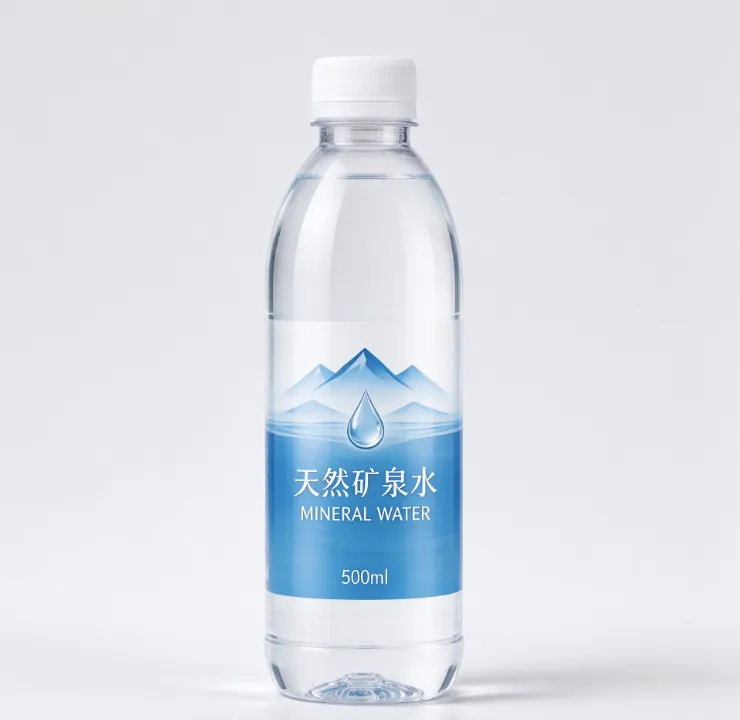
Firstly, the sustained stability of filling accuracy. High quality equipment can operate continuously for 72 hours, and the average filling error can be stably controlled within ± 0.5%. Don't underestimate this small error. Taking 500ml bottled water as an example, if the error is 1%, 50 liters of water will be lost for every 10000 bottles produced, resulting in a high cost of raw material loss over the course of a year. Stable filling accuracy can also help you pass the sampling inspection smoothly, avoiding the risk of substandard net content.
Secondly, material and hygiene compliance. All pipelines, filling heads, and liquid storage tanks that come into direct contact with materials must use food grade 304 or 316 stainless steel. The weld seam should be polished with a mirror finish, leaving no cleaning dead corners, facilitating daily cleaning and disinfection, meeting the requirements of relevant regulations for food production, and not worrying about failing the audit.
Thirdly, the efficiency of bottle type replacement. The current orders are generally in small batches and quickly scheduled, often requiring switching between different bottle types such as 330ml, 500ml, 1.5L, etc. High quality modular equipment does not require the replacement of complex parts, and can be replaced and debugged in 10-20 minutes. New orders can be put into production on the same day, without the need for long periods of downtime like old-fashioned equipment.
Fourth, the stability of the entire machine during long-term operation. Qualified equipment can operate continuously for 8 hours without any unnecessary shutdown, bottle jamming, or liquid leakage, and the comprehensive utilization rate of the equipment can be maintained at over 98%. Even with 24-hour continuous production during peak season, the output of production capacity can remain stable without sudden failures.
3. Select the right model based on the production scenario
There is no universal filling machine, only filling machines that meet your production needs.
If you are building a new small-scale water plant or preparing to set up a trial production line, with a small workshop area and limited budget, prioritize choosing a compact three in one machine. It integrates bottle separation, filling, and capping functions, occupying an area of less than 3 square meters. It is easy to install and debug, and can be operated by a single person with low entry barriers, allowing for quick production.
label:
Previous
Previous